

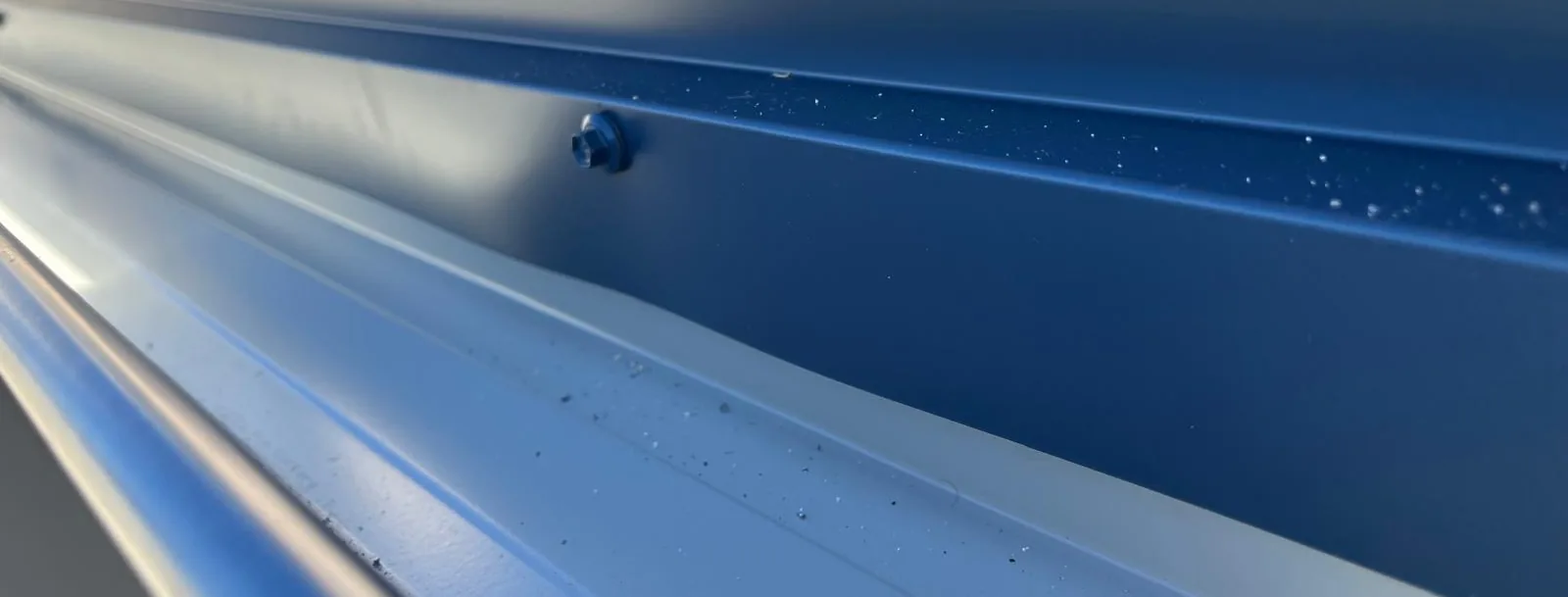
Roof flashing, valleys & sarking
Roof flashing, valleys and sarking matter because flat, sound roof surfaces rarely leak. Junctions do, where the roof meets a wall, a chimney, a skylight or another roof plane. Lead and Colorbond flashing, valley irons and sarking are the details that decide whether a roof is watertight.
Open 24/7 · free inspection and written quote
Sound familiar?
Signs you need this
- Leak that only appears in wind-driven rain
- Staining on a wall shared with the roof
- Rust streaks running out of a valley
- Damp around a chimney breast
Seeing one of these? It rarely fixes itself, and the earlier we look, the smaller the job usually is.
Free quote
Tell us about the roof
No obligation. We look, tell you what we find, and quote a fixed price before anything starts.
Water coming in right now? Skip the form and call 1300 169 810. We answer 24 hours a day, 7 days a week.
The work
What’s included
- Lead and Colorbond flashing replacement
- Chimney and parapet flashing
- Valley iron replacement
- Sarking installation during re-roofing
- Skylight, vent and penetration flashing
Why roofs leak at the junctions
A flat run of sound tile or Colorbond rarely lets water in. The leaks are at the places where one surface meets another: where the roof runs into a wall, around a chimney, beside a skylight, around a vent or flue, and in the valley where two roof planes meet and funnel water down between them. Those junctions are sealed by flashing, and flashing is a thin metal strip that has to survive decades of sun, heat, rain and movement.
That is why a leak at a junction often only shows in wind-driven rain, when water is pushed sideways under the flashing instead of running past it. If the stain is on a wall shared with the roof, or around a chimney breast, flashing is the first thing we check. For the wider approach to finding where water gets in, see our page on roof leak repairs.
Flashing: lead, Colorbond and what gets replaced
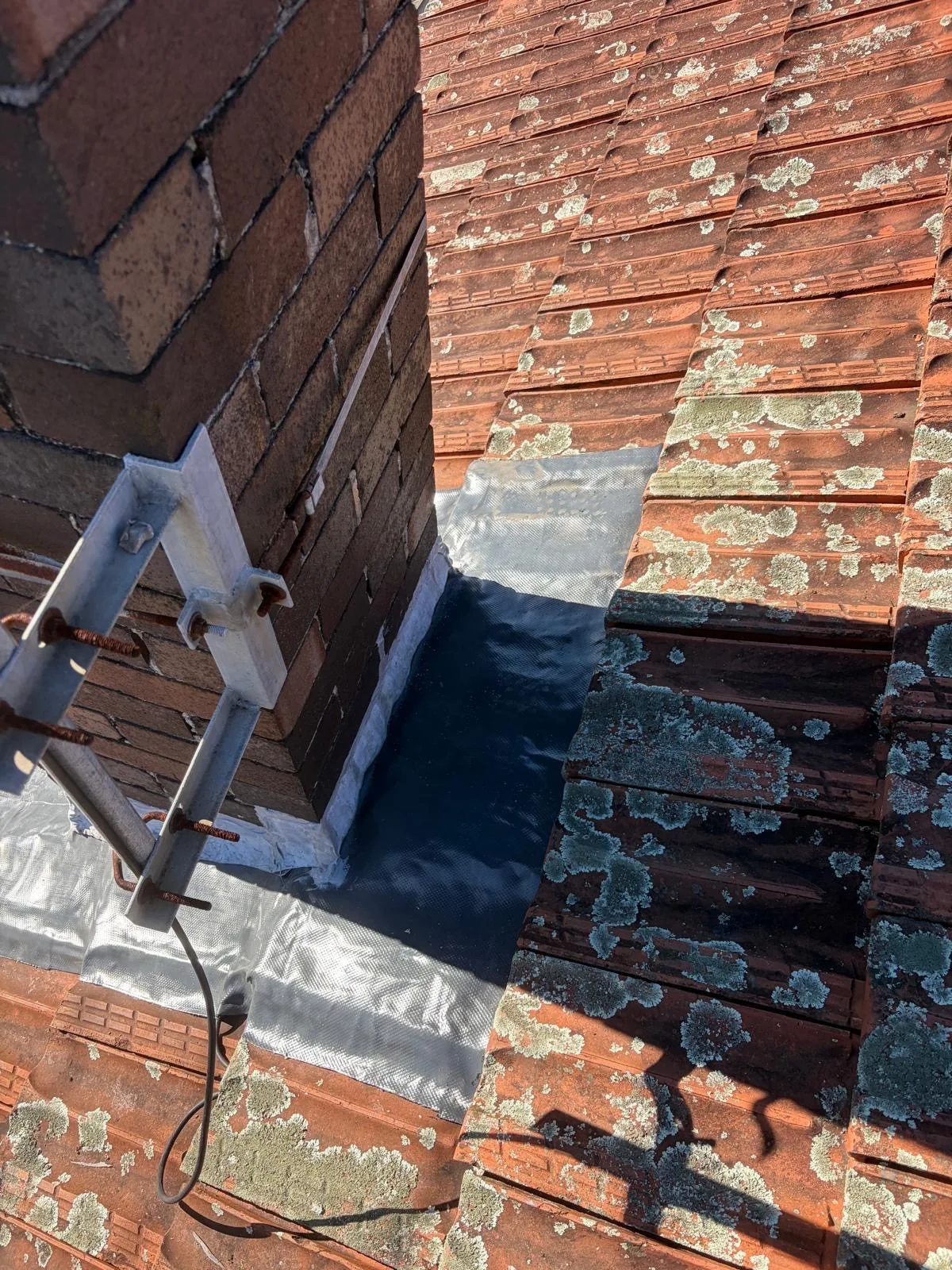
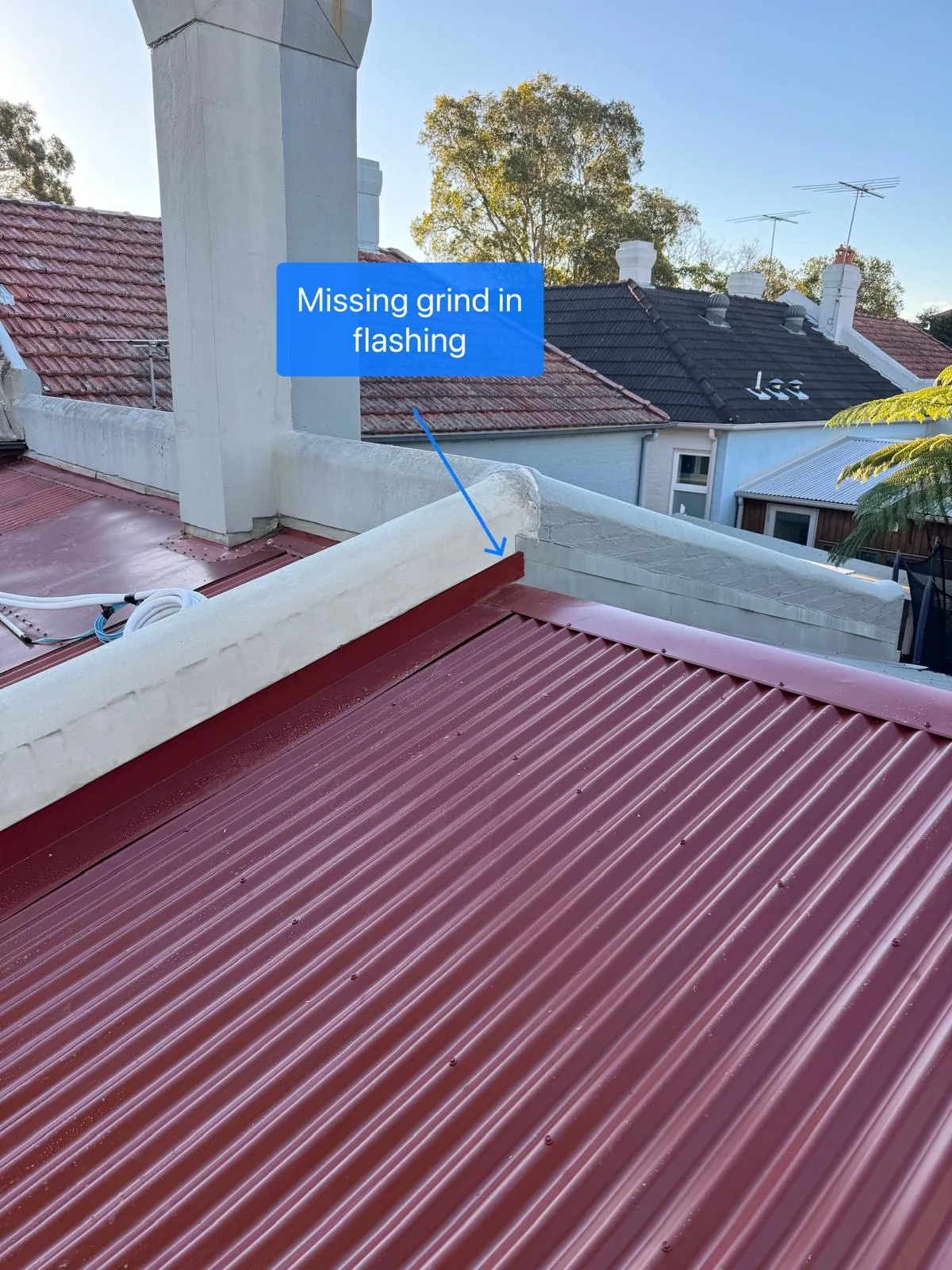
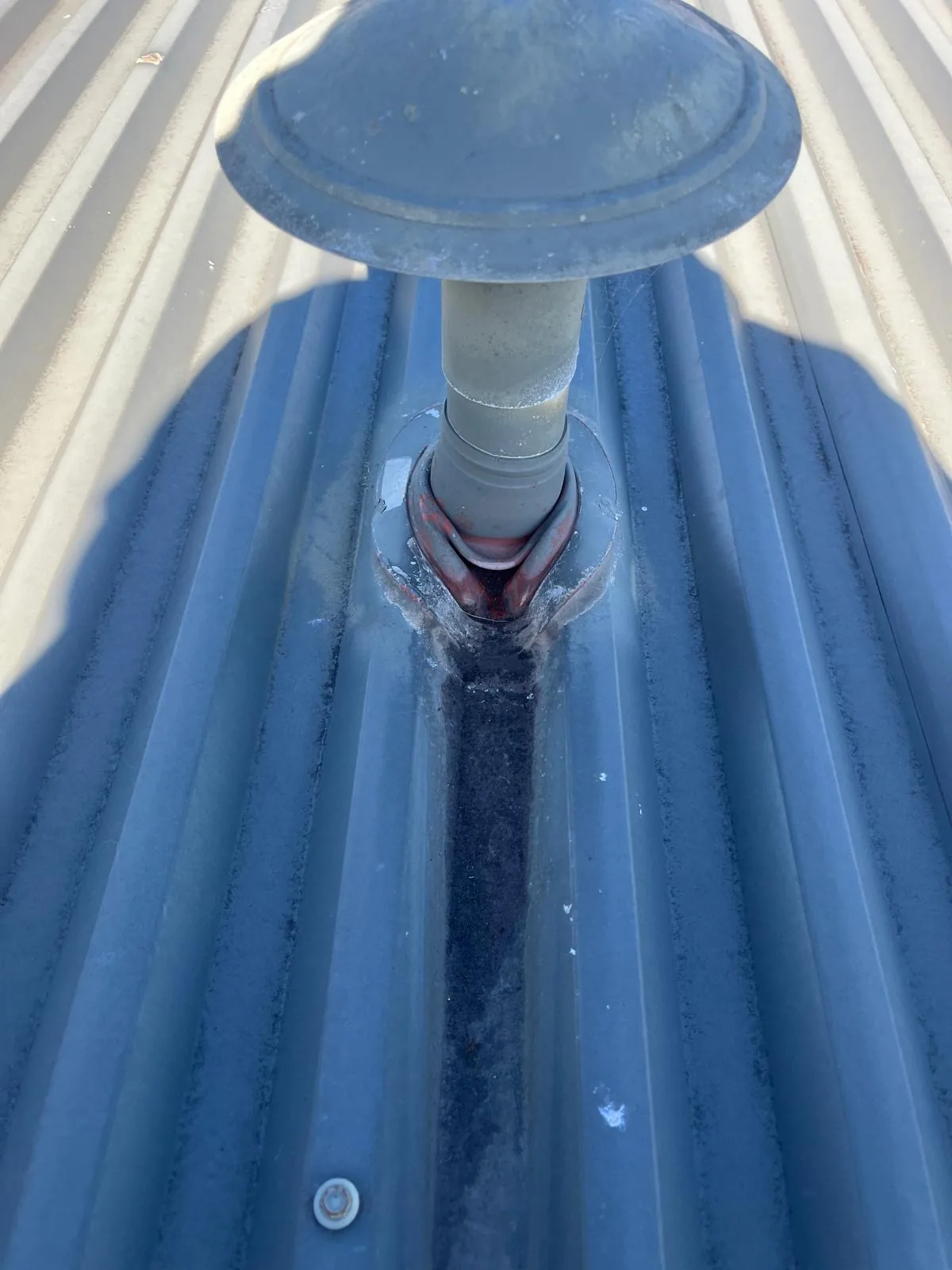
We replace lead and Colorbond flashing, including chimney and parapet flashing and the flashing around skylights, vents and other penetrations. Which metal is right depends on the roof and on what is already there. Lead is worked into old brickwork and around chimneys, and Colorbond flashing is shaped to sit with a Colorbond or tile roof. On a metal roof, flashing and capping are a regular part of the repair work.
Flashing fails in predictable ways. It lifts at the edges, rusts through, splits at a joint, or the sealant that was holding it down perishes. Re-sealing a failed flashing only buys a short reprieve if the metal itself is worn out, so we tell you whether a repair will last or whether the flashing needs replacing, and we photograph what we found so you can see it.
Valleys and valley irons
A valley is the channel where two roof planes meet, and on an Inner West tile roof it carries a great deal of water. The valley iron is the metal lining that sits under the tile edges. When it rusts, water gets under the tiles and into the roof space, and the first sign is often rust streaks running out of the valley or a stain on the ceiling below it.
Replacing a valley iron means lifting the tiles along both sides, fitting a new iron, and relaying the tiles so the edges shed into the valley properly. Leaves and debris sitting in a valley speed up the rust and can back water up under the tiles, so keeping valleys clear matters as well. Valley replacement is also part of a full roof restoration when the ridges, valleys and fixings are all near the end of their life together.
Where sarking fits
Sarking is the reflective membrane laid under the roof covering. Because it sits under the tiles or sheets, it is not something we sell as a job on its own. We install it as part of a re-roof, including a tile-to-Colorbond conversion, where the old roof comes off and new sarking goes down before the new roof goes on. See roof replacement and re-roofing for how that job runs.
Sarking also matters when you are tracing a leak. Water that gets past a tile or a flashing often runs along the sarking and drops at the first low point it finds, which can be a long way from where it came in. That is one reason we trace the entry point before we quote.
Harbour suburbs and older homes
Salt air off the water ages flashings and fixings faster on the harbour peninsulas, so a leak in Balmain or Drummoyne is more often a corroded flashing than a cracked tile. On older Federation and Victorian houses, chimneys and parapet walls add more junctions to seal, which is where lead flashing is most often needed.
What decides the cost
We do not quote a figure over the phone, because flashing and valley jobs vary a lot. What moves the price is how many junctions are affected, whether it is flashing, a valley iron or both, the metal used, how high and hard to reach the roof is, and whether water has already damaged the ceiling or timber. After we look, you get a written, fixed-price quote before any work starts. The inspection and the quote are free.
Our work
What this looks like on the roof
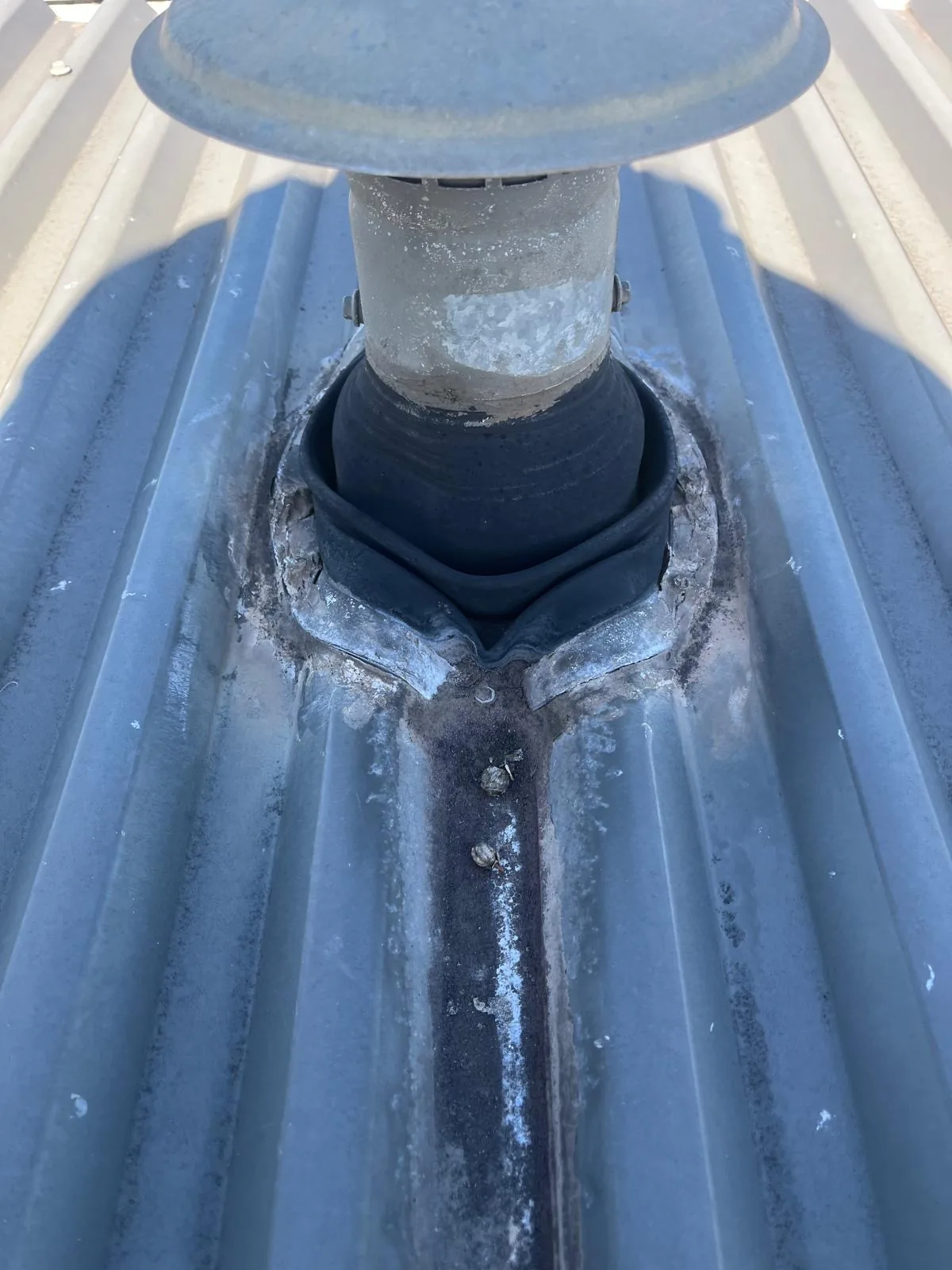
Photos from our own jobs: the roofs as we found them and as we left them, not stock imagery.
Cost
What this costs, honestly
Anyone who quotes you a firm price over the phone is guessing. Four things move the number, and we can only weigh them from the roof, which is why we look first, then quote a fixed price before any work starts. The inspection and the quote are free.
How much of the roof is involved
Three cracked tiles and a re-point is a morning. A whole ridge line, or a valley that's rusted through end to end, is not.
What it's made of
Terracotta, concrete tile, slate and Colorbond all behave differently and cost differently to work on. Matching an old terracotta profile costs more than replacing a modern concrete tile.
How hard it is to get to
A single-storey bungalow with a driveway is straightforward. A three-storey terrace with no street frontage, shared valleys and no room to stage from means scaffolding and time.
What's underneath
This is the one that moves the number most. If water has been getting in for a while, the battens, rafters or fascia may have gone. We can't see that until we're up there, which is exactly why we look before we quote.
Questions
Common questions
Is the quote free, and is there any obligation?
Yes and no, in that order. We'll come out, get on the roof, and give you a written quote at no cost. There's no obligation to go ahead, and we won't chase you.
Are you really available 24/7?
Yes. Not an answering service. The phone gets answered. If water is coming through your ceiling at 2am, that's exactly when you need a roofer, and we'll get someone out to make it safe. The permanent repair happens once the weather clears and we can see properly.
My ceiling is stained but the roof looks fine. What's going on?
That's the normal case, not the odd one. Water almost never comes through directly above the stain. It enters somewhere higher up, runs along a batten, a rafter or the sarking, and drops at the first low point it reaches. That can easily be several metres from the actual hole. It's why patching the obvious spot so often fails, and why we trace the entry point properly before quoting anything.
Do you do commercial and strata work?
Yes, both. A good deal of our work is converted warehouses, large-span metal roofs and box gutters around Alexandria, Marrickville and St Peters, plus strata buildings across the Inner West and the CBD. We're used to working with strata managers and around tenants.
Are you licensed and insured?
Yes, fully licensed and insured, for both domestic and commercial work.
Which areas do you cover?
The Inner West is home. Our yard is in Rosebery, so most Inner West jobs are a short drive. We also work across the Sydney CBD and out through Parramatta and Auburn. If you're not sure whether you're in range, call and ask; the answer is usually yes.
Why does my roof only leak in strong wind and rain?
Usually because the water is getting in at a flashing or valley. Wind drives rain sideways under flashing and up under tile edges, so a light shower never reaches the weak spot. It is still a leak, and the fix is normally re-flashing or a valley repair.
What is roof flashing and why does it fail?
Flashing is the metal strip that seals the join where a roof meets a wall, chimney, skylight, vent or another roof plane. It fails when it lifts, rusts through, splits at a joint or loses its sealant. We check whether a repair will last or whether it needs replacing, and photograph what we find.
Do you replace lead flashing around chimneys?
Yes. We replace chimney and parapet flashing in lead or Colorbond, depending on the roof and the brickwork it has to seal against.
What are the signs of a rusted valley?
Rust streaks running out of the valley, a stain on the ceiling below it, or water showing up after heavy rain. A rusted valley iron lets water under the tiles, so it is worth checking early. Replacing it means lifting the tiles either side and relaying them over a new iron.
Do you install sarking on its own?
No. We install sarking as part of a re-roof, including a tile-to-Colorbond conversion, because it sits under the roof covering and the old roof has to come off first.
How much does flashing or valley repair cost?
It depends on how many junctions are affected, whether it is flashing, a valley iron or both, the metal used, how hard the roof is to reach, and whether water has damaged the ceiling or timber. We look first and give you a written, fixed-price quote before any work starts. The inspection and the quote are free.
Service areas
Where we work
- Sydney CBD2000
- Leichhardt2040
- Rozelle2039
- Newtown2042
- Balmain2041
- Annandale2038
- Glebe2037
- Stanmore2048
- Summer Hill2130
- Haberfield2045
- Erskineville2043
- Camperdown2050
- Drummoyne2047
- Burwood2134
- Strathfield2135
- Redfern2016
- Concord2137
- Lane Cove2066
- Marrickville2204
- Alexandria2015
- Petersham2049
- Dulwich Hill2203
- Ashfield2131
- St Peters2044
- Five Dock2046
- Surry Hills2010
- Rosebery2018
- Mascot2020
This page was last reviewed on 17 August 2026 by Inner West Roof Repairs.

Roof or gutter trouble? Talk to us today.
We answer 24 hours a day, 7 days a week. Call now, or request a quote and we'll get back to you.